“Good access does not make disability disappear. It makes enough room for the rest of me to appear too.“
— Beatrice Leong
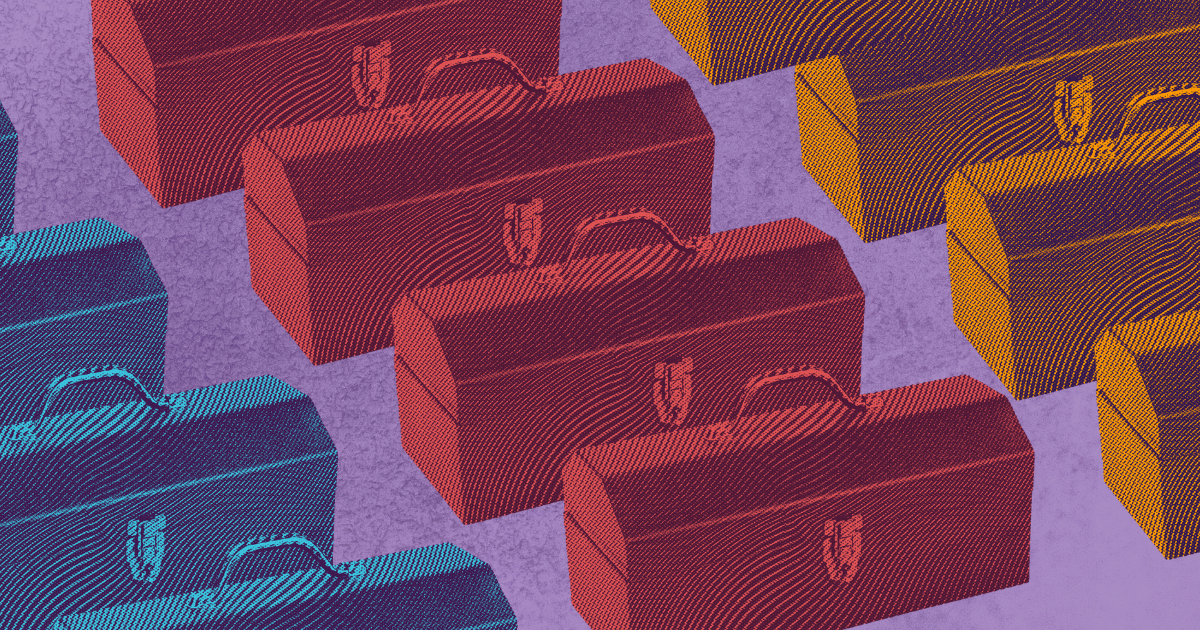
Image Description: Repeating, staggered, cascading columns of colorized toolboxes in blue, red and yellow, over a purple textured background. (Graphic by Lissa Deonarain)
Each year, FWD-Doc selects a delegate to attend the Berlinale/European Film Market (EFM)’s Toolbox Programme. Earlier this year, Beatrice Leong, a FWD-Doc member from Malaysia, was selected to attend. We asked her what her top five takeaways she had after attending at the intersection of all her identities.
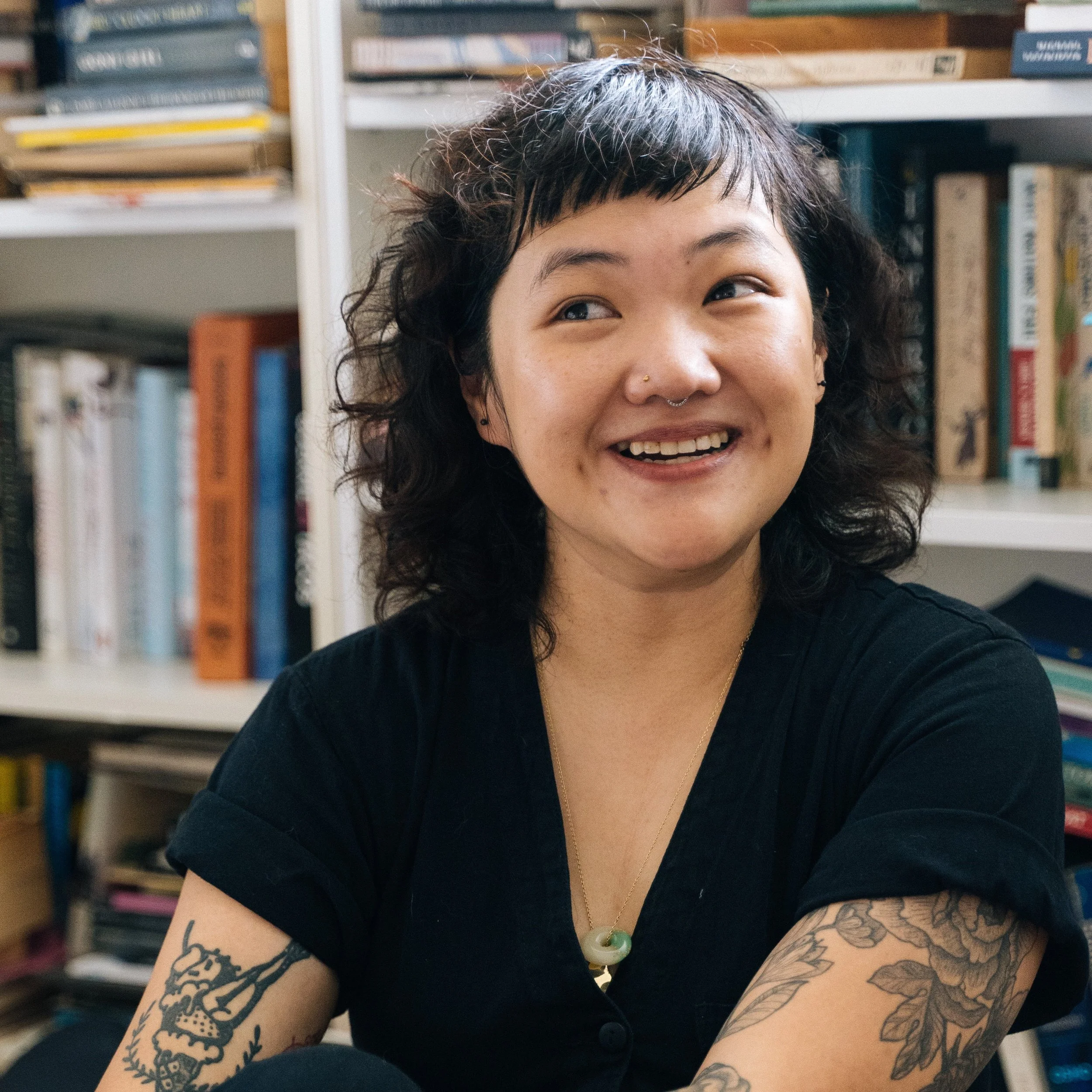
Beatrice Leong is a Malaysian documentary filmmaker and gender-disability activist who believes in the power of stories to name what others silence. She was finally diagnosed with Autism in adulthood, and after a lifetime of psychiatric and medical injustice, she began using storytelling to reclaim what was lost and connect with others who’ve been left out. Alongside filmmaking, she works internationally to advance disability inclusion, policy change, and narrative justice. She serves on the Disability Justice Project advisory board. Her film, THE MYTH OF MONSTERS will be her first feature documentary exploring her personal story about mothers, silence, and what it means to belong.
Check out her incredibly insightful learnings below!
1) Good access means I could stop fighting the room, and just be in the room.
EFM was good to me — I want to say that clearly. It was one of the most accessible and thoughtful industry spaces I have been in so far, not because everything was perfect, but because I could actually enjoy myself. I went to meetings. I joined workshops. I met people. I even went to parties (with pictures to prove!), which is usually not my thing.
That happened because access was not treated like an afterthought. The online sessions before Berlin helped me understand the space before arriving. The coordinators checked in. They asked questions without making me feel like a burden. When captions were needed, they shifted things. When I was overwhelmed, they helped create room around that and the casual and friendly check-ins by the team.
2) Sometimes access is just knowing someone came with you.
Having an access companion made a real difference.People often imagine access companions in a very practical way: someone to help with logistics, movement, schedules, bags, directions (yes, that’s important too). That is part of it. But for me, the deeper thing was knowing I had someone there who came for me — someone who could step in before it's overwhelming. Someone who understood when I was no longer okay and helped me ask my questions when my brain was frazzled.
That mattered because I was not only attending a market: I was carrying a very personal project. Every time I speak about it, I am not just pitching a film, I am also exposing parts of my life, my family, my trauma, my country, and the political work I am now inside.
EFM made space for my companion in a way that felt generous. She was not treated like an inconvenience or an assistant I had dragged along because I could not cope. She was recognized as part of what allowed me to participate. That is access too.
3) The best access lets me talk about the work, not only my disability.
One of the things I appreciated most was that I did not feel trapped in explaining myself. I could speak about my film as a film. I could talk about structure, production, politics, financing, story, ethics, and what kind of collaborators I needed. I was not reduced to “the autistic filmmaker” in the room.
This matters because disabled filmmakers are often flattened very quickly. People hear “disability” and they think the story is already obvious. They expect inspiration, overcoming, trauma, healing, or advocacy. Good access does not make disability disappear. It makes enough room for the rest of me to appear too. And EFM really fulfilled this part, and it greatly helped me with my confidence in moving on with the project.
4) But it also made me ask: what happens if you are not already inside a supported pathway?
This is the harder part. EFM worked well for me partly because I came through FWD-Doc. People knew I was coming from a disability-centred network and I was part of a program. There had already been conversations. The programme leads were prepared. They asked before I had to push. I am grateful for that.But it also made me think about the people who do not come through that kind of pathway.
What if you are just a disabled filmmaker arriving at the market on your own? What if you do not have the confidence to disclose? What if you do not have the language for your access needs yet? What if you are afraid that asking for support will make people see you as difficult, unstable, unprofessional, or too much work?
This is where disability inclusion still falls short. We know how to talk about disability now. We know we need more disabled filmmakers. We know access matters. But access is still too individualised. It still depends too much on disclosure, bravery, kindness, and the right person being in the right role. That is not enough.
5) Relationships opened the room. That is beautiful, but also uneven.
The most useful parts of EFM happened through people: A warm introduction. A coordinator making space. A mentor helping me think through the project. Someone said, “You should meet this person.” A conversation that helped me understand what kind of producer I need next. That was valuable. It gave me clarity. It helped me see that my film does not just need production support. It needs the right kind of support: someone who understands personal documentary, political risk, trauma, disability, and the fact that conflict has to be repairable.
But this also showed me how much the industry runs on informal access. If you know people, the room opens. If you do not, you can be standing in the same building and still feel outside it. I feel this deeply because of this opportunity in meeting a few funds, distributors, sales and foundations, I managed to move a little with my film.
For disabled filmmakers, especially those of us outside Europe and North America, that matters. We are not only trying to pitch a film. We are learning the codes of the room while managing access, energy, money, anxiety, and often a very fragile production structure. So I think we need to consider more on intersectionality in disabled filmmakers' participation.
So yes, relationships matter. But access has to include helping people build those relationships, not assuming they already have them.
6) The big gift is that EFM showed what is possible.
I do not want this to sound like a complaint. EFM was one of the best access experiences I have had. The people were kind. The care was real. The support made a difference. But because it worked, it helped me see the bigger question more clearly: how do we make this normal?
How do we make captions planned, not improvised? How do we make companions understood as access, not extra guests? How do we make pre-event orientation standard? How do we create spaces where disabled filmmakers do not have to repeatedly explain themselves? How do we design markets where participation is not measured by stamina, speed, and how well you can perform being fine?